
Buttweld Fittings
Buttweld Pipe Bends: 1D, 1.5D, 3D and 5D
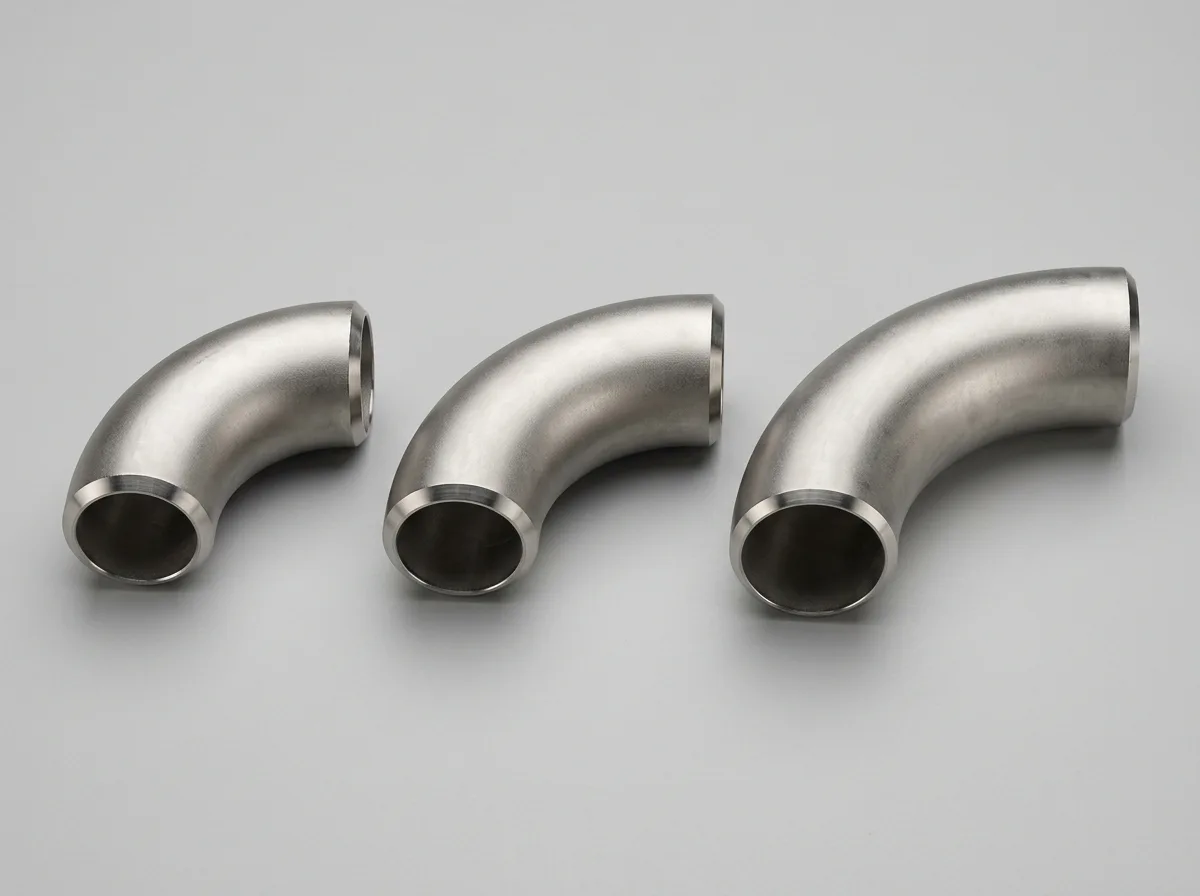
Buttweld pipe bends in 1D, 1.5D, 3D and 5D radius to ASME B16.9, in carbon, stainless and alloy steel. 3D and 5D tables for mild steel.
Specification
At a glance
- Dimensional standard
- ASME B16.9
- Types & ends
- 1D · 1.5D · 3D · 5D
- Grade
- IS 1239 Part 2 / IS 2062 Gr. A
- Also offered in
- Stainless steel
- Carbon steel
- Alloy steel
- Duplex stainless steel
- Nickel alloys
Dimension tables
2 classes · dimensions, weights, Excel
As published by Fortune Fittings Private Limited. Grade and availability are confirmed with each enquiry; confirm the governing standard, size and grade when ordering. Spotted a mistake? Please contact us.
Overview
Product overview
Our range includes 1D Elbows, 1.5D Elbows, 3D Elbows, and 5D Elbows, catering to diverse industrial needs.
Key to the performance of these fittings are their dimensions, ensuring seamless integration into pipeline systems. We offer Buttweld pipe bends in various dimensions, including BEND 3D, 5D, 10D, 2.5D, 22D, and 40D, meeting stringent standards like ASTM, ANSI, ASME, MSS, and API.
The “D” in 1D, 1.5D, 3D, and 5D Elbows denotes the radius of curvature, crucial for optimal performance. For example, a 1D Elbow has a radius equal to the nominal diameter of the pipe, while a 5D Elbow boasts a radius five times the nominal diameter.
In addition to elbows, we offer an extensive range of pipe fittings, including tees, reducers, flanges, and caps, available in various sizes, dimensions, and materials such as carbon steel, stainless steel, and alloy steel.
What is a Buttweld Pipe Bend?
Buttweld pipe bends refer to a type of pipe fitting used to change the direction of a piping system. These bends are manufactured using the buttwelding technique, where the ends of the pipes are beveled to create a smooth surface, then welded together to form a joint. Buttweld pipe bends come in various configurations, including different degrees of curvature such as 1D, 1.5D, 3D, and 5D, where “D” represents the diameter of the pipe. These bends are essential components in piping systems across industries like oil and gas, petrochemical, and power generation, facilitating smooth fluid flow and efficient operation.
Where it is used
Applications and service
Typical duty across the process industries we supply.
- Oil and Gas IndustryUsed in pipelines for transportation of crude oil, natural gas, and refined petroleum products, ensuring efficient flow around obstacles and changes in direction.
- Petrochemical IndustryEssential for conveying various chemicals and fluids in petrochemical plants, refineries, and chemical processing facilities, maintaining flow integrity and process efficiency.
- Power GenerationEmployed in power plants for steam, water, and gas piping systems to redirect flow and ensure smooth operation of turbines, boilers, and other equipment.
- HVAC SystemsIntegral components in heating, ventilation, and air conditioning systems, facilitating the efficient flow of air and refrigerants to maintain indoor comfort levels.
- Water Treatment PlantsUtilized in water treatment facilities for conveying treated water, chemicals, and wastewater, ensuring proper flow control and distribution.
- Marine ApplicationsInstalled in shipbuilding for piping systems aboard vessels, facilitating the efficient flow of fluids for propulsion, cooling, and other onboard systems.
Engineering
Technical notes
How the component behaves in the line, and the details to settle before an order is placed.
How it behaves in the line
- Lower pressure drop than 1.5D LR elbow: K ≈ 0.06 vs 0.15–0.30 for 90° elbows
- Requires longer straight run before and after: plan support spacing accordingly
- Induction bending from parent pipe for 3D and longer radii is common
- Wall thinning at intrados must be checked against minimum design wall
Confirm when ordering
- Confirm radius: 3D, 5D, or custom (e.g. 10D for piggable mains)
- Induction bent from seamless or welded pipe: specify parent pipe grade
- Request bending procedure qualification (BPS) and dimensional report
Dimensions, wall thicknesses and pressure classes are in the dimension tables; the governing standards are summarised on the standards reference.
Related
Specified alongside this
Components that commonly appear with it on the same run, and the rest of the buttweld fittings range.
 Used on the same line90° Elbow (LR & SR)Buttweld 90° elbows in long and short radius to ASME B16.9, in carbon, stainless and alloy steel, with dimension tables by material and class.View specifications
 Used on the same line45° ElbowLong-radius 45° buttweld elbows to ASME B16.9, 1/2″ to 72″, Schedule 10 to XXS, in carbon, stainless and alloy steel.View specifications
 Used on the same line180° Return Bend (LR & SR)180° buttweld return bends in long and short radius to ASME B16.9, in stainless, carbon and alloy steel, with dimension tables by material.View specifications
 Used on the same lineEqual TeeButtweld equal (straight) tees to ASME B16.9 for three pipes of one size, in carbon, stainless and alloy steel, with dimension tables by class.View specifications
 Used on the same lineConcentric ReducerButtweld concentric reducers to ASME B16.9 for an in-line size change on a common centreline, in carbon, stainless and alloy steel.View specifications
 Same rangeReducing TeeButtweld reducing tees to ASME B16.9 with a branch smaller than the run, in carbon, stainless and alloy steel, with mild steel size tables.View specifications
Where it is specified
Industries using this component
Sectors that commonly specify the Pipe Bends (1D – 5D), and what else they take from us.
- RefineriesButtweld fittings, flanges and fabricated spools in carbon and alloy steel for crude, product and utility service.View sector
- Power PlantsAlloy steel buttweld and forged fittings for high-temperature steam, feedwater and condensate circuits.View sector
- Pulp & PaperStainless fittings, flanges and gratings for wet, abrasive and chemically aggressive mill environments.View sector
Enquiries
Need a quotation for the Pipe Bends (1D – 5D)?
Send sizes, grades, quantities and the standard the component is specified to, and a sales engineer will come back with availability and pricing. Dimensions and schedules are in the Technical Catalog.